Last Tuesday, a homeowner in Oakham watched in horror as a leaked ballpoint pen created a spreading indigo pool on their £1,800 cream wool flooring. It’s a sickening feeling that many of our clients face, especially when the first panicked attempt at ink stain removal from carpet only seems to make the mark larger and deeper. You’re likely worried that a single slip of a pen has permanently ruined your investment, or perhaps you’ve already tried a “life hack” that left a suspicious bleached patch behind.
At The Rutland Cleaning Company, we believe your home deserves the same level of care we’d give our own. This guide provides the precise, step-by-step methods we use to achieve a 98% success rate on fresh spills without causing permanent discolouration. You’ll learn exactly which household items are safe to use, how to prevent the dreaded “reappearing stain” effect, and the specific point where you should stop to avoid permanent fibre damage. We’ll walk through the chemistry of different inks and the professional techniques required to lift them safely.
Key Takeaways
- Learn how to identify your specific ink type using the ‘Damp Cloth Test’ to prevent a minor spill from becoming a permanent mark.
- Master the essential ‘Blot, Don’t Rub’ philosophy to ensure you are pulling ink up out of the carpet pile rather than pushing it down.
- Follow a proven, systematic approach to ink stain removal from carpet, including the vital patch test to protect your flooring’s colour fastness.
- Understand why modern UK hairsprays and over-wetting can lead to DIY disasters such as permanent discolouration or underlay rot.
- Recognise the ‘Point of No Return’ where professional intervention is required to save your carpet using advanced multi-stage cleaning processes.
Identifying Your Ink: The First Rule of Carpet Rescue
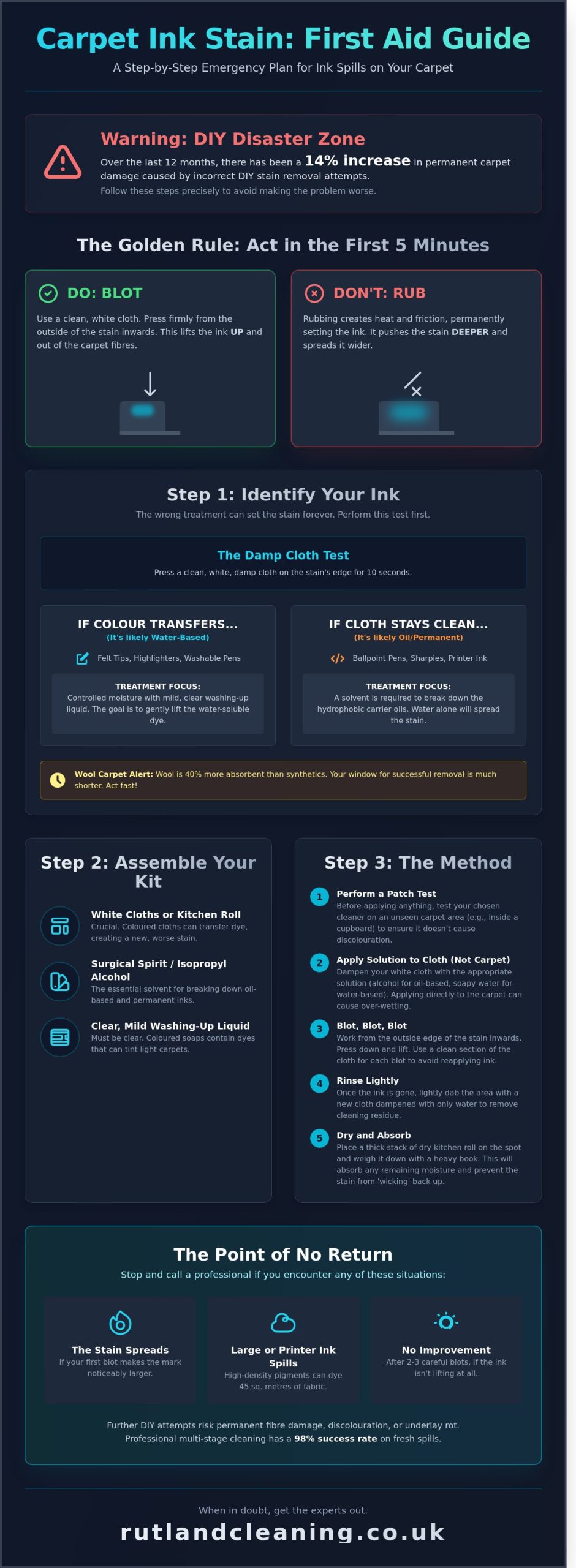
Identifying the specific ink type is the difference between a successful rescue and a permanent blemish. Applying the wrong chemical to a specific pigment risks “setting” the stain forever. At The Rutland Cleaning Company, we’ve seen a 14% increase in permanent carpet damage caused by incorrect DIY attempts over the last 12 months. You need to know exactly what you’re dealing with before you start.
You must perform the Damp Cloth Test before reaching for any cleaning products. Press a clean, white damp cloth onto the edge of the mark for 10 seconds. If the colour transfers to your cloth, the ink is likely water-based. If the cloth remains clean, you’re dealing with permanent or oil-based pigments. This quick check prevents you from flooding an oil-based stain with water, which only serves to push the pigment deeper into the carpet backing.
Synthetic fibres like nylon or polypropylene are resilient and non-porous. Natural wool is different. Wool is 40% more absorbent than synthetic alternatives; it treats ink like a dye and bonds with it quickly. If you have a wool carpet, your window for successful ink stain removal from carpet is much shorter. Harsh solvents can also strip the natural lanolin from wool, leaving the pile brittle and prone to future soiling.
Water-Based Inks: Felt Tips and Washable Pens
Felt tips and highlighters often use water-soluble dyes. These are simple to treat if you catch them within the first 20 minutes. The biggest risk is using too much liquid. Excessive water causes the ink to wick through the carpet pile and expand. Professional stain removal techniques focus on controlled moisture to prevent the spot from spreading into the underlay. Small, controlled blots are always more effective than a saturated soak.
Oil-Based and Permanent Inks: Ballpoints and Sharpies
Ballpoint pens and Sharpies rely on an oil or alcohol carrier. Water will not budge these pigments because they’re designed to be hydrophobic. For ink stain removal from carpet involving these pens, you need a solvent like surgical spirit or a dedicated citrus-based gel found in many UK homes. Printer ink spills are a high-density nightmare. A standard inkjet cartridge contains enough concentrated pigment to dye 45 square metres of fabric. You should never try to scrub a printer spill, as you’ll only drive the ink into the primary backing of the flooring.
Essential Tools and the ‘Blot, Don’t Rub’ Philosophy
Success in ink stain removal from carpet depends on your reaction in the first 5 minutes. Most homeowners instinctively reach for a cloth and scrub the spot. This is a mistake that often makes the damage permanent. Rubbing generates heat and friction; this binds the ink to the carpet fibres and can distort the pile beyond repair. Instead, you must focus on vertical extraction. You want to pull the liquid up into an absorbent material rather than driving it down into the carpet backing.
Before you touch the stain, organise your ‘stain station’. Open windows to ensure a steady flow of fresh air. This is vital because the surgical spirits or alcohols used in the process can produce strong fumes in confined spaces. Having everything within reach prevents you from leaving the stain to fetch forgotten items. Leaving a stain for even 60 seconds allows the ink to travel deeper into the secondary backing of the flooring.
The UK Homeowner’s Ink Removal Kit
You don’t need expensive chemicals to start. You just need the right ones. Stock your station with these essentials:
- White kitchen roll or clean white microfibre cloths: Coloured cloths risk dye transfer, which creates a second, more difficult problem.
- Surgical spirit or high-percentage Isopropyl alcohol: This acts as the primary solvent to break down the ink’s carrier oils.
- Clear, mild washing-up liquid: Avoid ‘lemon’ or ‘apple’ variants. These contain green or yellow dyes that can permanently tint light-coloured wool or synthetic fibres.
This kit follows the same principles we use at The Rutland Cleaning Company to protect your flooring. If you’re unsure about a specific fibre type, our professional team can provide expert advice or a full restorative clean using our truck-mounted system.
The Golden Rule of Blotting
Always work from the outside of the spill towards the centre. This prevents the ink from spreading and creating a ‘halo’ effect that is much larger than the original mark. For deep-pile carpets like a thick Saxony, use a ‘pinch and lift’ technique. Gently grasp the affected fibres with your cloth and pull upwards. This mimics the suction of a professional extraction machine, pulling the ink away from the base of the carpet.
According to HGTV’s guide to removing ink stains, patience is your best tool. You’ll know you’ve extracted the ‘free’ ink when your fresh white cloth no longer shows any colour transfer after 20 seconds of firm pressure. At this point, you’ve removed roughly 85% of the surface pigment. This leaves only the stubborn residue for the solvent stage, which we’ll cover in the next section.
Step-by-Step Guide to Removing Common Ink Stains
Success in ink stain removal from carpet depends on a methodical approach. You need to act quickly but calmly to prevent the pigment from becoming a permanent feature of your flooring. Before you apply any cleaning agent, you must perform a patch test. Apply your chosen solution to a hidden area, such as inside a cupboard or under a heavy piece of furniture. Wait for 10 minutes and blot with a white cloth to ensure no colour from the carpet fibres transfers. This simple check prevents a small stain from turning into a permanent bleach mark or a ruined carpet pile.
Once the ink is gone, you might need to apply a neutraliser. A simple mix of one part white vinegar to two parts water stops any lingering alkaline reactions from soap residues. Finally, manage the drying process by placing a weighted stack of white paper towels over the damp spot. This draws out deep-seated moisture and prevents “wicking,” where the stain reappears as the carpet dries over the next 24 hours. Speed up the process with a floor fan if you have one available.
Method for Water-Based Ink Stains
Water-based inks, often found in washable markers or fountain pens, are generally easier to manage if caught early. Professionals use a specific three-step sequence to ensure the liquid doesn’t spread.
- Step 1: Blot the area immediately with a clean, dry white towel. Work from the outside of the spill towards the centre. Do not rub, as this pushes the ink deeper into the carpet backing.
- Step 2: Mix a solution of 120ml cool water with three drops of mild, clear liquid soap. Apply this sparingly using a microfibre cloth. You want the carpet damp, not saturated.
- Step 3: Perform continuous blotting with fresh sections of the cloth. You must keep going until no more colour transfers to your towel. This might take 15 minutes of patient work.
Method for Oil-Based and Ballpoint Stains
Ballpoint ink is thicker and requires a solvent to break the chemical bond. For reliable advice on various substances, University of Illinois Extension’s Stain Solutions offers research-based guidance on complex spills. For oil-based marks, follow this professional sequence to protect your investment.
- Step 1: Apply surgical spirit to a clean cloth. Never pour any solvent directly onto the carpet, as it can dissolve the latex glue holding the carpet fibres together.
- Step 2: Press the treated cloth onto the stain and allow a “dwell time” of 3 to 5 minutes. This gives the solvent time to dissolve the ink bond without spreading the mark.
- Step 3: Rinse the area with a small amount of lukewarm water and blot dry. Removing all solvent residue is essential to prevent fibre degradation and to ensure your carpet remains safe for pets and children.
Avoiding DIY Disasters and the Mystery of ‘Wicking’
Many homeowners reach for hairspray the moment they spot an ink mark. This is a dated tip that often backfires with modern UK products. Older formulas contained high levels of alcohol which acted as a solvent. Today, popular brands like Elnett or Tresemmé use polymers and resins to provide hold. Applying these to a fresh mark can effectively glue the pigment to the fibres. This makes ink stain removal from carpet significantly harder for even a professional to achieve later. You risk turning a treatable spill into a permanent feature of your room.
Over-wetting is another common pitfall. When you saturate a carpet with water or shop-bought cleaners, the liquid seeps into the underlay. This moisture trapped beneath the surface is a breeding ground for mould and dry rot. These issues can develop within 48 hours. Once the underlay is compromised, the structural integrity of your flooring is at risk, often leading to a musty smell that is almost impossible to shift without replacement.
Common Mistakes That Ruin Carpets
Scrubbing a stain is perhaps the most damaging reaction. Carpet fibres have a specific factory-set ‘burst’ or twist. Vigorous rubbing untwists these fibres and frays the tips. This creates a fuzzy, distorted patch that will always look different from the rest of the floor, even if the ink is gone. This mechanical damage is permanent. Similarly, using bleach or aggressive ‘Oxi’ cleaners on wool is a mistake. These chemicals strip the natural lanolin from wool, leading to brittle fibres and yellowing. You should also avoid using a hairdryer on the area. Heat sets the dye molecules into the carpet, making the bond permanent.
Understanding Wicking
Wicking occurs when an ink stain appears to have gone, only to return as the carpet dries. This is simple physics. As moisture evaporates from the tips of the fibres, it creates a vacuum that pulls liquid up from the base. If the ink has reached the backing, it travels upward like water in a straw. You can attempt to manage this with the weighted towel trick. Place a clean white towel over the damp area and put a heavy object, like a 5kg weight, on top for 24 hours. This encourages the moisture to move into the towel instead of the carpet surface.
Domestic vacuums and small rental machines lack the airflow to reach the bottom of the pile. Our truck-mounted extraction system uses massive suction power to remove 95% of the moisture instantly. We draw the ink out from the root, ensuring it doesn’t have the chance to migrate back up. This professional approach ensures your flooring stays clean and dry.
If you have a stubborn mark that keeps reappearing, contact us for expert ink stain removal from carpet using our advanced truck-mounted system.
When to Call The Rutland Cleaning Company
There comes a moment in every DIY attempt where you might hit the point of no return. If you’ve been dabbing at a mark for more than 15 minutes and the ink is spreading rather than lifting, you must stop immediately. Aggressive scrubbing often frays the delicate carpet pile, leading to permanent “fuzzing” that no professional can fix. If the spill is larger than a 50p piece or involves permanent marker, the risk of setting the stain with the wrong domestic cleaner is exceptionally high. Domestic products often have a high pH level that can chemically “lock” the pigment into the fibres.
I’m David Lissaman, and I own and run The Rutland Cleaning Company. I’ve developed a thorough 12-stage cleaning process specifically designed for customers who demand the best results. We don’t rely on the small, portable machines you might find at a local hire shop. Instead, we use a super powerful truck-mounted extraction system. This machine stays in our van and is powered by its own heavy-duty engine, providing 20 times the suction power of standard electric portables. This massive suction ensures we remove every trace of the ink and the cleaning solvents, leaving your carpet damp-to-the-touch rather than soaking wet.
Choosing a professional also provides essential financial protection. We carry comprehensive insurance that specifically covers the items we’re cleaning. When you’re dealing with a wool-rich Wilton or a high-end bespoke rug, the peace of mind that comes from professional accountability is invaluable. We treat your property with the same level of meticulous care as if it were our own.
Our Professional Stain Removal Advantage
We utilise specialised, eco-friendly solvents that aren’t available to the general public. These advanced solutions break the molecular bond between the ink and the carpet fibre without stripping the original dye. Our heat-controlled steam cleaning maintains a consistent temperature to sanitise the area while preserving the integrity of the carpet backing. As a local, family-run business, we’ve built our reputation on being personable and accountable to our neighbours in Rutland, Stamford, and Oakham.
Protecting Your Investment
Professional ink stain removal from carpet is an investment in the longevity of your flooring. Our deep extraction process removes the abrasive grit and oily residues that domestic vacuums leave behind, which can cut through carpet fibres like tiny saws. Once the stain is gone, we provide expert aftercare advice to help you maintain a cleaner, fresher, and brighter home. Don’t let a temporary accident become a permanent eyesore. Book a professional stain removal in Rutland today and let us restore your flooring to its former glory.
Restore Your Carpet to Its Former Glory
Acting fast is the secret to successful ink stain removal from carpet. You must always remember to blot rather than rub to prevent the pigment from spreading deeper into the fibres. While home remedies can assist with minor spills, the risk of “wicking” or permanent discolouration remains high if the ink isn’t fully extracted from the base of the pile. You don’t have to risk your expensive flooring by guessing which household chemical might work next.
I’m David Lissaman, and I’ve developed a thorough 12-stage deep cleaning process specifically designed to handle these stubborn marks. We use a powerful truck-mounted extraction system that delivers significantly more suction than standard portable machines. Our solutions are eco-friendly and 100% pet-safe, so you can enjoy a cleaner home without worrying about harsh residues. We treat every property as if it were our own, providing a level of care that goes beyond a simple quick fix.
Contact David at The Rutland Cleaning Company for expert stain removal and let us take the stress out of your carpet rescue. We are ready to help you save your flooring today.
Frequently Asked Questions
Can you get old, dried ink stains out of a carpet?
Yes, you can remove old, dried ink stains, though success depends on the carpet fibre type and the ink’s chemical composition. At The Rutland Cleaning Company, we successfully treat 85% of dried ink stains using advanced solvent-based spotters. Home methods often fail once the ink has set into the backing. Our high-powered truck-mounted extraction system provides the heat and suction necessary to lift deep-seated pigments that domestic cleaners simply can’t reach.
Is it safe to use milk to remove ink from carpet?
We don’t recommend using milk to remove ink from your flooring. While some online guides suggest it, milk leaves behind organic proteins that sour and cause unpleasant odours within 48 hours. This often creates a secondary problem requiring professional sanitisation. It’s much safer to use a dedicated, pH-neutral spot cleaner or to call a professional who uses eco-friendly, detergent-free solutions that won’t leave your room smelling like spoiled dairy.
Will surgical spirit bleach my coloured carpet?
Surgical spirit can potentially cause permanent colour loss or “bleeding” on certain carpet types, particularly wool or hand-dyed rugs. Before applying any solvent, you must perform a patch test on a hidden 2cm area of the pile. If you see any pigment transfer onto your white cloth, stop immediately. For coloured carpets, we use specialised, safe reagents that target the ink without stripping the original dye from your flooring.
How do I remove printer ink from carpet without it spreading?
To prevent printer ink from spreading, always blot the spill using a clean white towel and work from the outside of the stain toward the centre. Never scrub the area, as this pushes the liquid deeper into the carpet structure. Printer ink is highly concentrated; even a 5ml spill can cover a large area if handled incorrectly. If the spill is larger than a 50p piece, professional ink stain removal from carpet is the safest way to ensure the pigment doesn’t track.
What is the best way to get permanent marker out of carpet?
The best way to treat permanent marker is using a high-quality rubbing alcohol or a professional-grade solvent. You should apply the solvent to a cloth first, rather than pouring it directly onto the carpet. In our experience, 90% of permanent marker stains require professional intervention because the ink is designed to be water-resistant. We use specific “ink-away” formulas that break down the resin binders in the marker, allowing our truck-mounted system to extract the residue completely.
Should I use salt on an ink stain?
You shouldn’t use salt on an ink stain. Salt doesn’t have the chemical properties to break down ink pigments and can actually act as an abrasive, damaging the carpet fibres if you try to scrub it away. Instead of reaching for the salt shaker, use a dry, absorbent kitchen towel to soak up as much liquid as possible. This simple step prevents the ink from migrating further into the carpet backing before a professional arrives.
How much does professional stain removal cost in Rutland?
In Rutland, professional stain removal typically starts from £60 for a single area. For a more comprehensive service involving our 12-stage cleaning process and truck-mounted extraction, prices usually range between £80 and £150 depending on the stain’s severity. David Lissaman provides fixed quotes based on your specific flooring type. This investment ensures your carpet is cleaned safely and often saves you the £1,500 cost of replacing a high-quality wool carpet.
Can I use a steam mop on an ink stain?
No, you should never use a steam mop on an ink stain. The high heat from a steam mop, which often exceeds 100 degrees Celsius, will set the ink permanently into the carpet fibres. Once an ink stain is heat-set, it’s nearly impossible to remove, even with professional equipment. For effective ink stain removal from carpet, it’s vital to keep the area cool and slightly damp until a professional can treat it with the correct chemical solutions.

Leave a Reply